The neighborhoods north and west of downtown
Sherman Hill is just northwest of downtown, and its streets are full of old houses. Drake spreads out around University Avenue to the west. Beaverdale is farther out to the northwest and is known for its brick houses. Highland Park is up on the north side. A lot of the houses in these neighborhoods went up between the late 1800s and the 1940s.
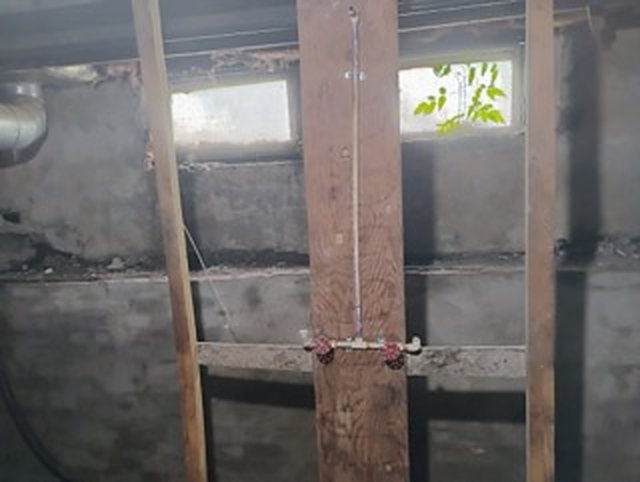
Down in the basements, these houses have a lot in common. They tend to be low and damp, with old brick piers holding up the middle of the house and small windows set at the top of the wall.
Rough stone, soft brick and lime mortar
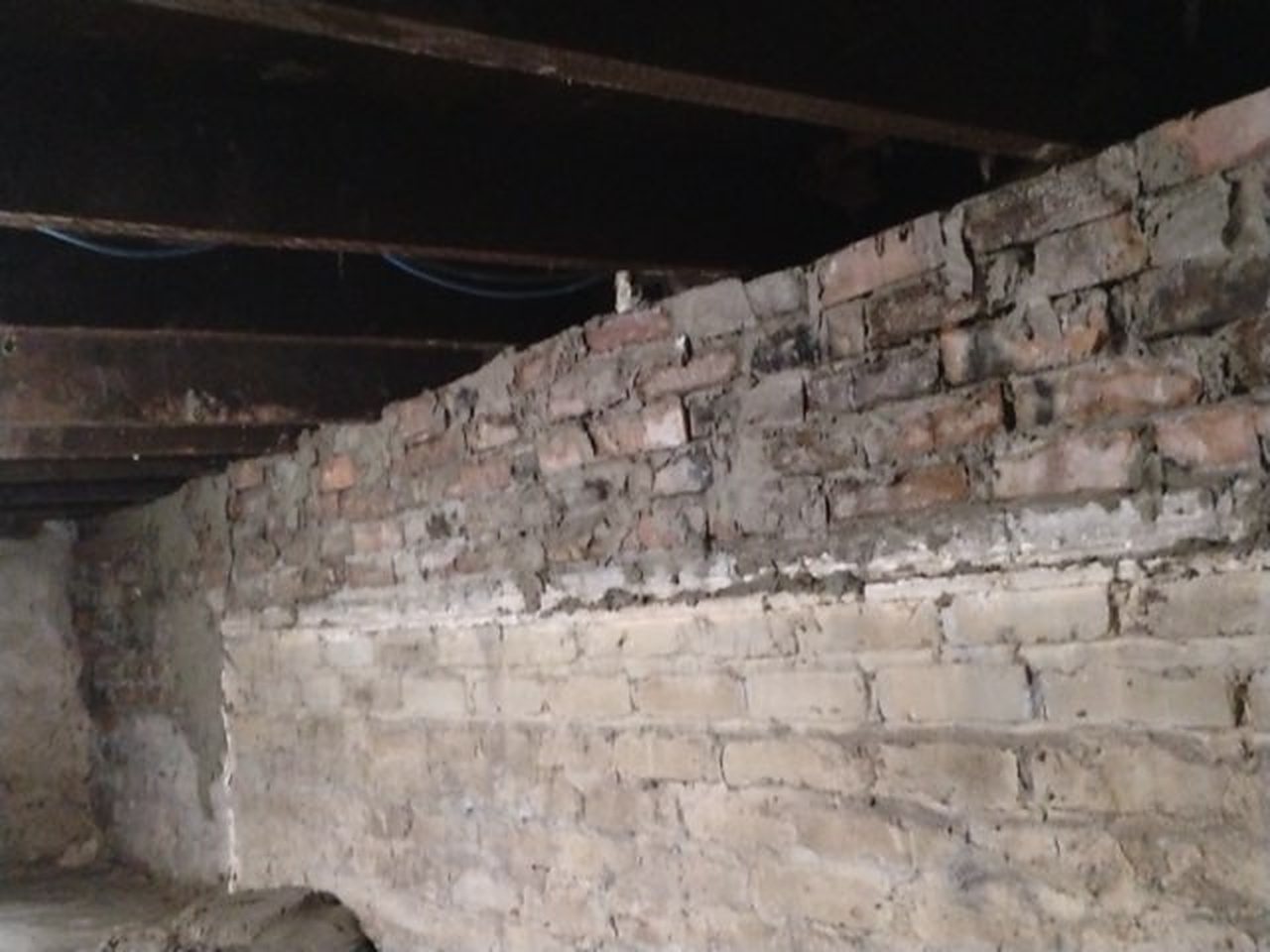
The walls under these houses are rough stone, old brick, or stone on the bottom with brick on top. The brick is soft, and all of it was laid in lime mortar, which is softer than the stone and brick around it. That was on purpose. Lime mortar gives a little as the house moves and lets damp work its way out through the joints.
But lime mortar does not last forever with wet clay pressed against the other side of the wall. It washes out and turns to sand you can rake out with a finger. Stones work loose, brick faces flake off low on the wall, and the wall feels damp to the touch for much of the year.
Patches done in a hurry are a common problem on these walls. A smear of hard material over loose, wet mortar holds the damp in behind it and pops loose after some winters. The loose mortar has to come out and the joints have to be filled before a wall gets a coat.
What Joe does with an old basement wall
Joe looks at how far gone the wall is first. Then he cleans out the loose mortar, fills and tuckpoints the joints, and coats the wall in cement. Where the bottom of an old wall needs it, he sets steel forms and rebar along the base and pours a new concrete ledge. Old brick piers can be wrapped in cement too.
A wall that has moved, is bowing in, or has a wide crack running sideways may need more than a coat. Some walls need a structural engineer to look first, and Joe will tell you if yours looks like one of them.
Turning an old basement into a room
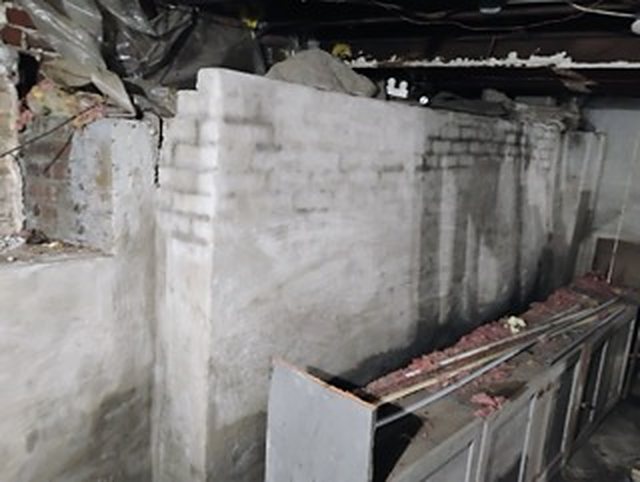
When a house in one of these neighborhoods needs more room, the basement is the obvious place to look. But an old stone basement needs its water and walls sorted out before drywall goes up. Otherwise the damp ends up behind the new wall, where nobody sees it until the room starts to smell musty.
A basement bedroom also needs a way out in a fire, and the small windows up at the top of an old wall are usually too small to climb through. That means an egress window: a bigger opening cut in the wall, the window itself, and a well outside with a way to climb out. The City of Des Moines sets the size, sill height and well rules, so ask the city about permits.