
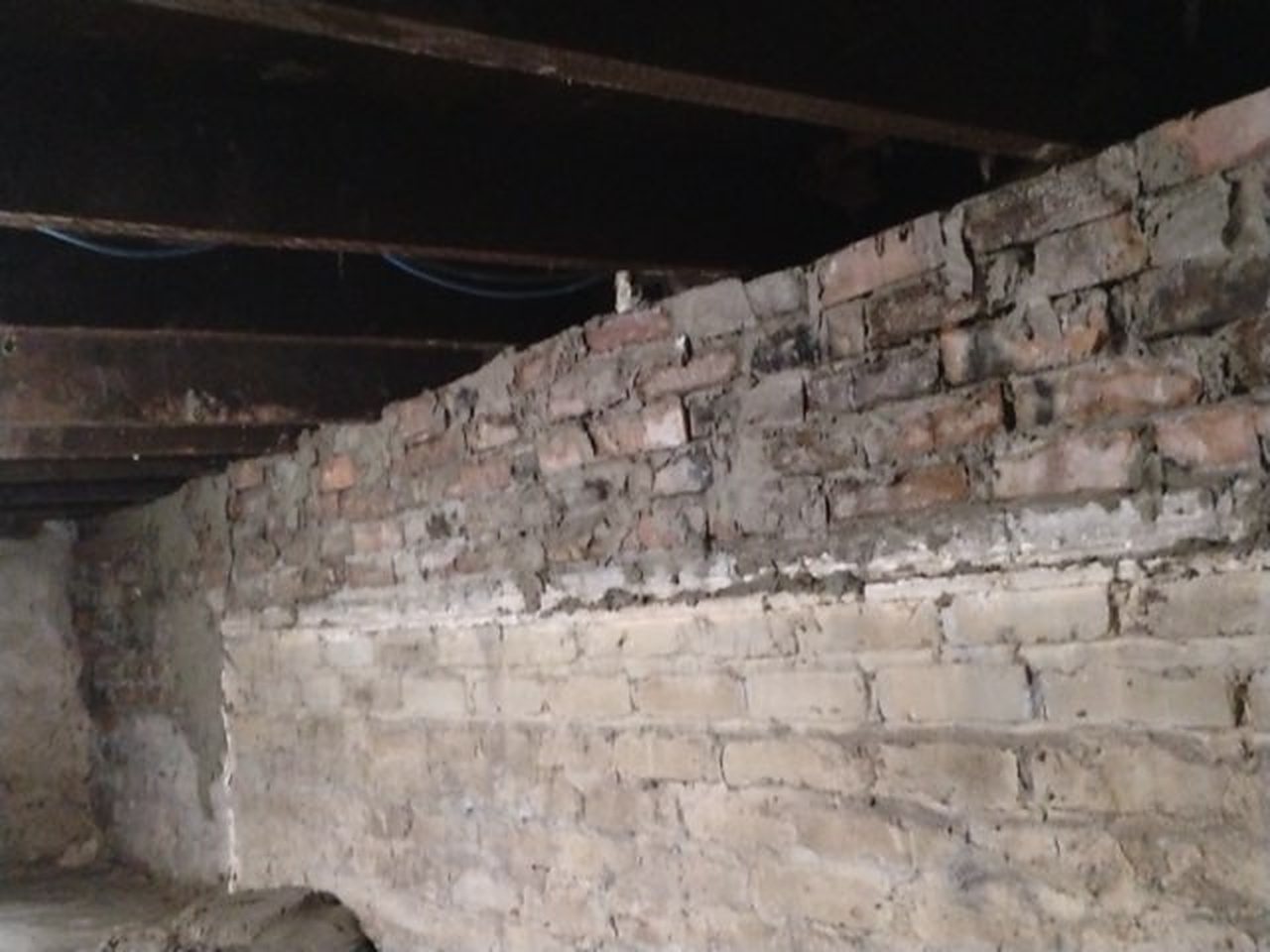
What the white stuff is
Concrete, mortar, block, brick and stone all carry some salt in them, and so does the soil around a house. When water soaks into a basement wall from the outside, it picks that salt up and carries it through. On the inside face the water dries off into the basement air, and the salt stays behind. That is the white powder, fuzz or crust you see. The trade name for it is efflorescence.
It can look like a dusting of flour, a white fuzz, or a hard crust that builds up in layers. On old walls it gets thick enough to scrape off in flakes. And it tends to show up in the same places every year, because water keeps coming through the same places.
Telling salt apart from mold
People see something white and fuzzy in a basement and think mold. The two are easy to tell apart once you touch them.
- Salt is crunchy or powdery and crumbles between your fingers. Mold is soft and smears.
- Put a drop of water on the powdery kind and it dissolves or goes flat. Mold only gets wet.
- Efflorescence grows on concrete, mortar, block, stone and brick. Mold shows up on wood, drywall, cardboard, carpet and dust.
- Salt has no smell of its own. Mold usually comes with a musty one.
Where it shows up is a map of the water
Efflorescence does not form on a wall that stays dry. So before you clean it off, take a photo, because where it sits tells you where the water comes in. While you are at it, look at the wood, drywall and boxes nearby. Salt and mold both come from damp, and they often turn up in the same basement.
This is how the patterns usually read.
- A band along the bottom of the wall: water collecting at the base, often at the joint where the wall meets the floor.
- A patch under a window: most often a window well that fills with water.
- A line along a crack or a run of mortar joints: water coming through those openings.
- One wall much heavier than the others: go outside on that side and look for a downspout, a low spot or ground that slopes toward the house.
- Up near the top of the wall: often water from an overflowing gutter, or soil piled too high against the house.
Why it shows up after a Des Moines spring
Most people notice it in spring. Snow piled against the house melts while the ground is still partly frozen, spring rain follows, and the heavy clay around Des Moines basements holds all that water right against the walls. The wall soaks it up. Then as the basement dries out later in spring, a new layer of white appears.
How much there is tells you something too. A light dusting after a wet spring means a little water moving through. Crust that is thick, or that comes back soon after you clean it, means a lot.
One thing to know. Fresh concrete, new mortar and a freshly coated wall can show a light white bloom early on as the water in the mix dries out, and that usually fades. Salt that keeps coming back season after season on an old wall is water from outside.
Why old stone and brick walls get it worst
Many older Des Moines houses, in neighborhoods like Sherman Hill, Drake, Beaverdale and Highland Park and on parts of the south side, sit on basement walls of rough stone or old brick laid in soft lime mortar. Most of those walls got little or no coating on the outside when they were built. Water from the clay soaks straight in, and the stone, brick and mortar all pass it through.
Water moving through also washes lime out of the mortar itself. After enough years of that, the mortar loses what holds it together and turns to sand. So on these walls the white crust usually comes with sandy joints, loose grit on the floor along the base, and brick faces that flake.
That flaking has a cause. When salt dries just under the face of a soft brick or stone instead of on top of it, the crystals grow in the pores and push the face off. You find a little pile of flakes and powder on the floor below. That is the salt doing real damage, and it means the wall needs more than a cleaning.
Cleaning it without making things worse
Clean it dry first. Most of it comes off with a stiff nylon brush and a shop vacuum to catch the dust. Wear a dust mask, since old walls shed sand and grit along with the salt.
Expect it to come back if the water does. Cleaning still helps. It lets you see the wall clearly, and how quickly the white comes back tells you how much water is moving through.
- Brush and vacuum dry. Water dissolves the salt and can carry it right back into the wall.
- If you need water for what is left, use as little as you can on a damp rag, then run a fan until the wall is dry.
- Skip wire brushes on old brick and soft mortar. They scratch the faces and dig out the joints.
- Skip acid cleaners and vinegar on old stone and brick walls. The lime in old mortar dissolves in acid.
- Do not pressure wash a basement wall. It drives water into the wall you are trying to dry out.
Why paint and sealer over salt fail
The usual next step is to paint the wall, or roll on a sealer from the hardware store. On a wall that is passing water, that tends to go badly. The water and salt are still coming. Now they hit the back of the paint, and the salt builds up there instead of on the surface. The paint blisters, bubbles and peels off in sheets, often with a white crust behind it.
On old stone and brick it can do worse than peel. Those walls have always dried toward the basement. Seal the inside face and the water stays in the wall longer, and more of the salt dries under the face of the brick and stone, where it pops pieces off.
Paint holds up fine on a basement wall that stays dry. The order that works is to stop the water, let the wall dry out, and then decide about paint.
Stopping the water behind it
The white stops coming back when the water stops moving through the wall. Start outside, where it costs the least. Carry downspouts out away from the house, clean gutters so they do not overflow, build the ground up so it slopes away from the wall, and clear out window wells.
If the salt keeps coming after that, the water is getting in another way. It could be old mortar, cracks, the joint at the base of the wall, or water held in the clay against the foundation. That is where Joe Gomez of JC Cement starts. He looks at where the water is getting in and what the wall is made of, then fixes it at that spot, inside along the walls or outside against the foundation. On old stone and brick walls that can mean filling and tuckpointing the joints and coating the wall in cement once the loose material and salt are off it.
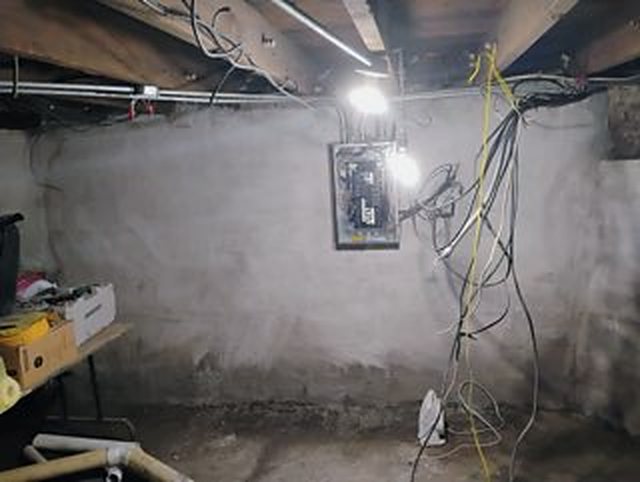
Next step for a white, crusty wall
The basement waterproofing page goes through how Joe finds the spot where water comes in and what he does about it. If the wall itself is crumbling, the basement wall repair page covers that side of it.
To get his eyes on it, call or text Joe at (515) 777-5018. Send a photo of the white crust before you clean it, a wider one of the whole wall, and what part of Des Moines you are in.