
What sits under the older houses in town
A lot of the houses in Sherman Hill, Drake, Beaverdale, Highland Park and parts of the south side went up between the late 1800s and the 1940s. Under many of them are basement walls of rough stone, old brick, or stone on the bottom with brick on top. They were laid in lime mortar, which is soft and was meant to be. It gives a little as a house settles, and it lets damp work its way out of the wall instead of getting trapped.
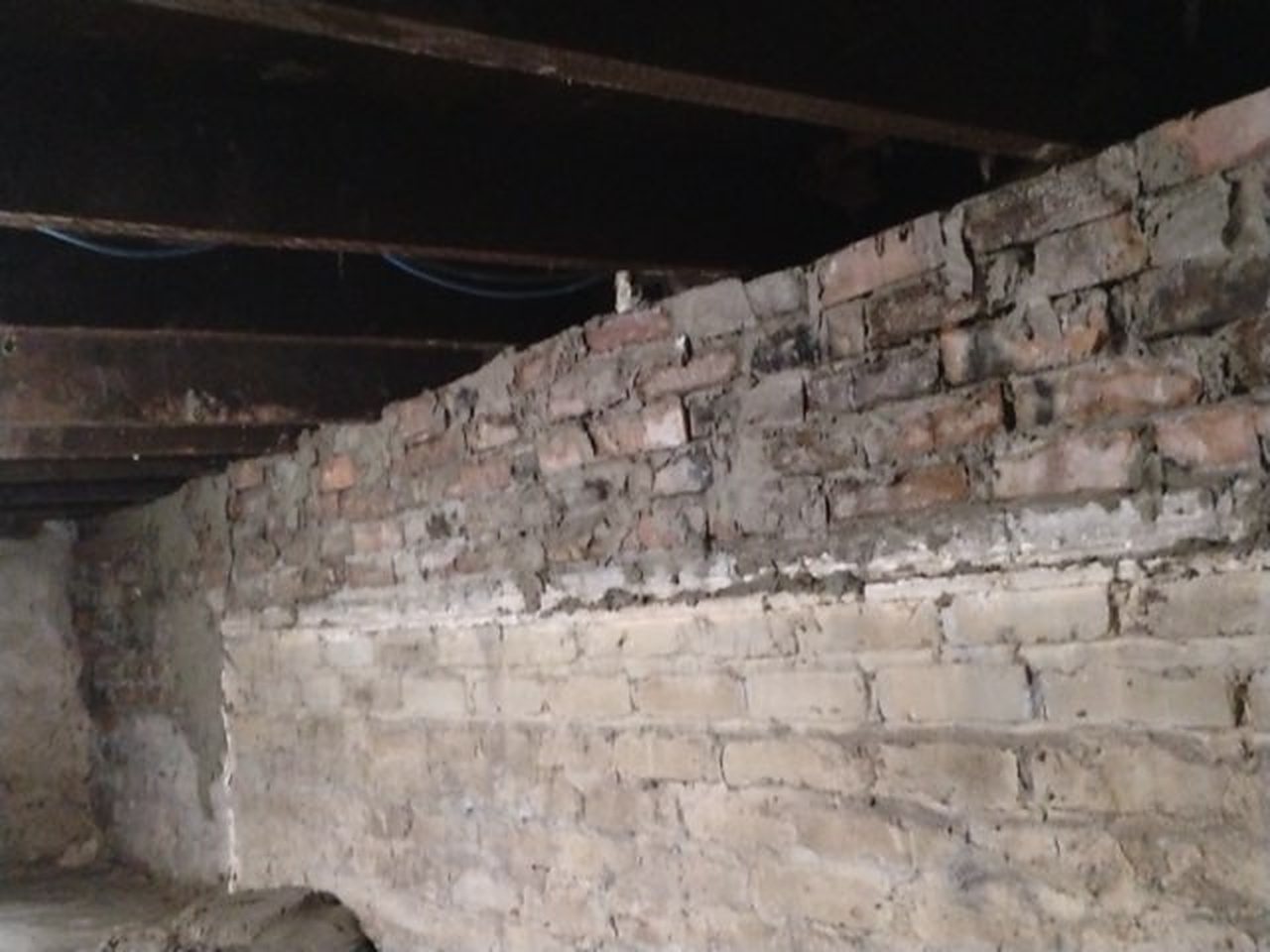
But soft mortar wears. Years of wet clay against the outside and damp air on the inside break it down, and freezing and thawing near the top of the wall speeds that up. The mortar turns to sand and trickles out. Stones work loose. Old brick was fired softer than brick made today, and it starts to crumble at the face.
Signs your basement wall needs work
Most old basements show a few of these. Several at once means the wall is wearing faster than it should, and water is most often part of the reason.
- Sand and grit collecting on the floor along the base of the wall
- Mortar that rakes out with a fingertip
- Stones or bricks that rock when you push on them, or have already fallen out
- A damp band along the bottom, or white crust on the face of the wall
- Old patches of hard cement that have cracked and are coming loose
- A brick pier crumbling where it meets the floor
Filling the joints and coating the wall
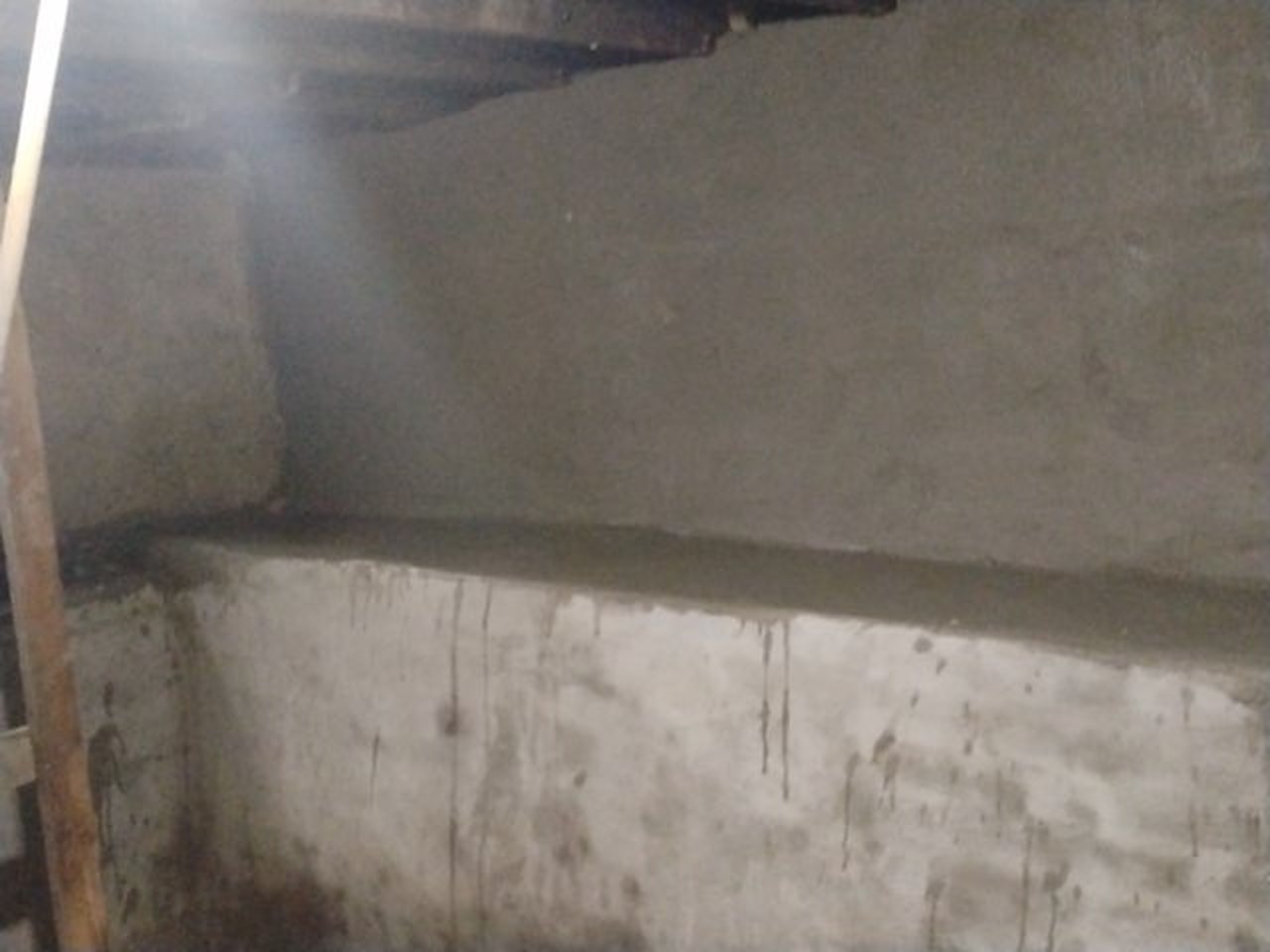
The repair starts with whatever is loose. Sand, dead mortar and old patches that are not holding come off. Deep joints and holes get packed with new mortar, and stones that worked loose get set back. Then the wall is coated in cement, troweled over the old face of the stone or brick. Masons call that coat parging. Joe's photos on this site show old walls coated in cement.
A coat like that holds the face of an old wall together and covers the joints so they stop shedding sand. It leaves a wall that is easier to keep clean, and it slows damp coming through. But a cement coat will not hold back water that is pushing through the wall by itself. If the wall gets wet after every storm, the water has to be dealt with too, and the basement waterproofing page covers that side of it.
The coat also has to suit the wall. A coat that is too hard, over a wall that stays wet behind it, can trap the water and let go in sheets. That is part of why the water gets looked at first.
A new concrete ledge at the base
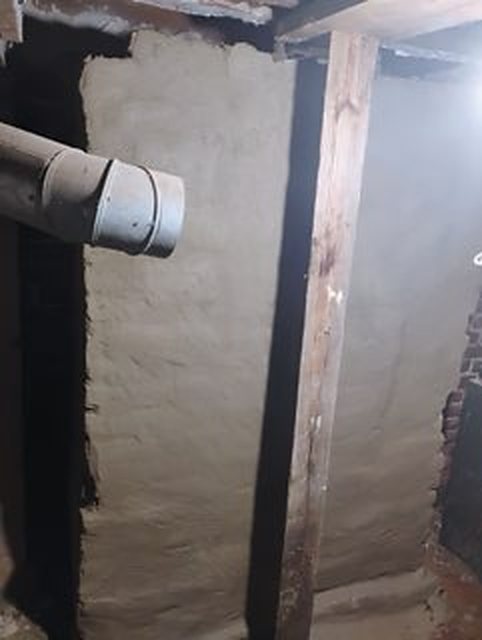
The bottom of an old basement wall usually has it the worst. It sits in the damp longest, the mortar there goes first, and on a lot of walls it has been patched over and over. Where a wall needs it, Joe pours a new concrete ledge along the base.
Steel forms get set out from the wall with rebar inside, and concrete fills the space between the forms and the old wall. When the forms come off, the bottom of the wall has a new face of concrete and sits wider on the floor, and the wall above can be coated in cement down to meet it.
Some walls do not need a ledge. It comes down to how far gone the bottom of the wall is.
Old brick piers
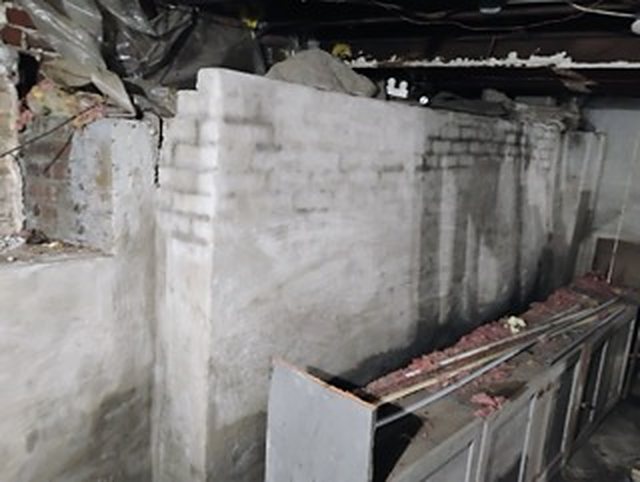
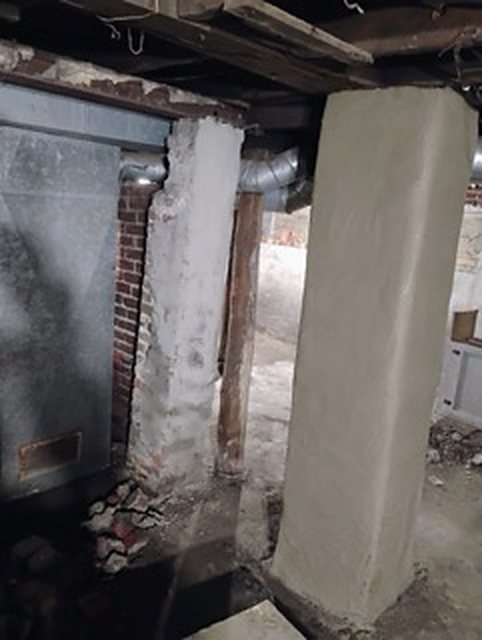
Lots of older basements have brick piers standing out in the room, holding up the beam under the floor. They wear the same way the walls do. The mortar goes soft, and the bottom bricks crumble where they meet the damp floor.
Joe wraps old brick piers in cement, which covers the old brick in a square coat. A pier that is leaning, or a beam that has sagged above it, is a bigger question, and some of those need a structural engineer to look first.
Walls that have moved
Filling and coating repairs the face of a wall. It does not straighten a wall that has moved. Some walls need a structural engineer to look first, before any repair. The signs are a wall bowing in toward the room, a wide crack running sideways along the wall, stones bulging out of line, or a crack that keeps getting wider.
Concrete block walls from the middle of the century are the ones that bow most often, when wet clay pushes on them winter after winter. Wall anchors and braces are made for that kind of trouble. Ask Joe about them, and expect an engineer to weigh in first.
If you are not sure a crack is moving, mark both ends with a pencil and write the date beside it. Then check it again in a few months.
What to send Joe
Text a few photos to (515) 777-5018. One of the whole wall from across the room, one up close where it is worst, and one of the bottom where the wall meets the floor. Say what the wall is made of if you know, and what part of Des Moines you live in. If there is paneling, drywall or shelving in front of the wall, mention that too.
JC Cement is based in Des Moines. If you are in a town nearby, call or text and ask.