
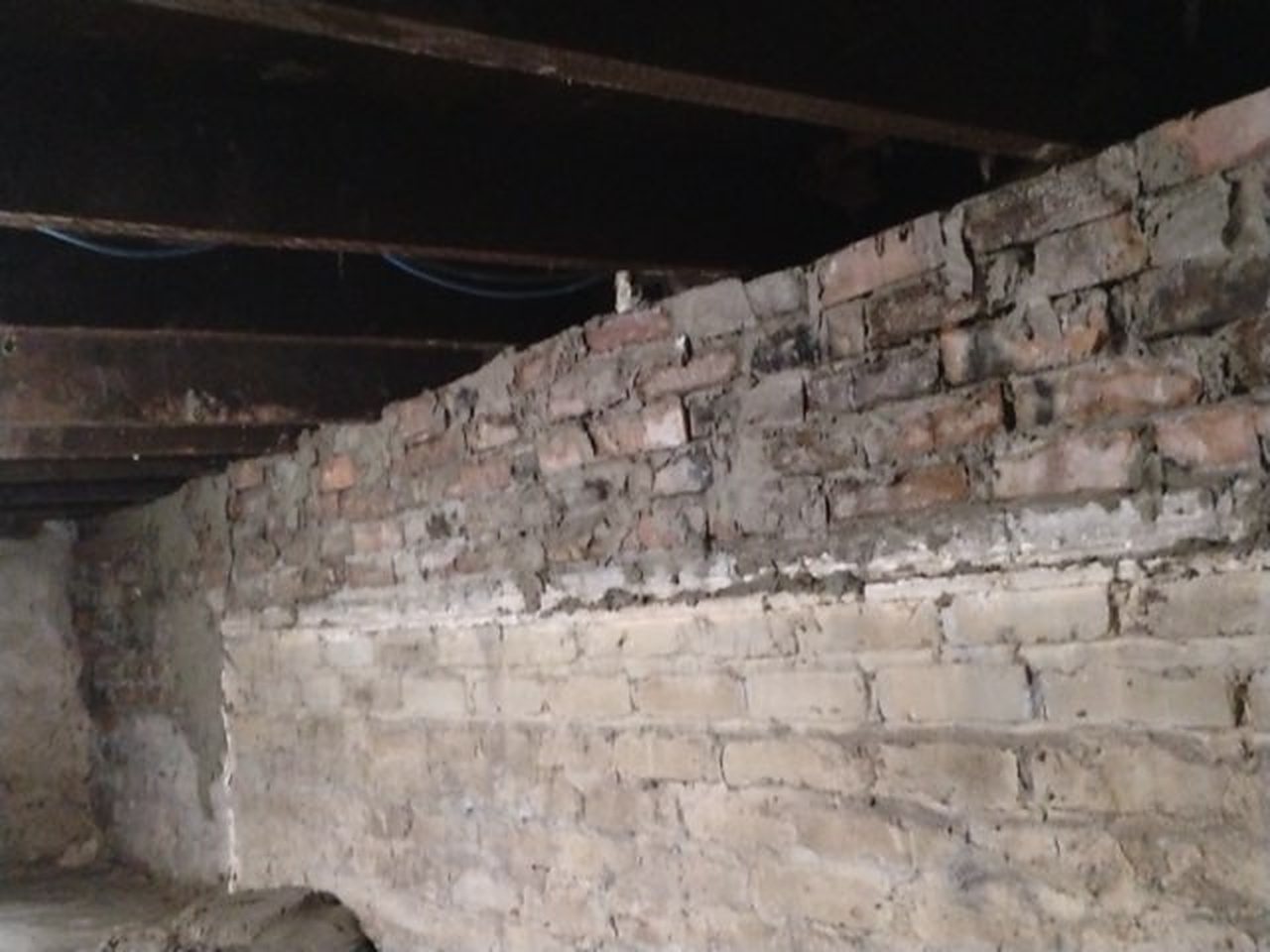
What happens inside a joint over the winter
Mortar is full of tiny pores, and it soaks up water the way a brick does. When that water freezes it swells, and it pushes out against the mortar around it. When it thaws, the pores are a little bigger, and the next rain or the next melt fills them a little deeper.
One freeze does almost nothing. It is the number of them that does the damage. A Des Moines winter goes back and forth across freezing over and over, with sun on a wall in the afternoon and a hard freeze that night. Every swing works the joint a little looser. Snow piled against the house and melting on warm days keeps the bottom of the wall wet the whole time.
After enough winters the face of the joint crumbles, and then the joint behind it. That is how mortar turns to sand.
Why some walls wear out first
Freezing only hurts mortar that is wet. So the joints that go first are the ones that stay wet the longest. On most houses that means a few spots.
- Walls under a gutter that overflows or leaks at a seam
- Joints right under window sills, where water runs off the sill onto the wall
- The bottom of the wall, where snow piles up and rain splashes back off the ground
- The top of the foundation where it comes up out of the ground
- Walls on the shady side of the house, which dry out slowly
Old lime mortar and soft brick
Many older Des Moines houses, built from the late 1800s into the 1940s, were laid up in lime mortar. It is soft and it lets damp pass through, and it was meant to wear out before the brick does. On a house in the older neighborhoods north and west of downtown that has gone a long time without tuckpointing, the mortar on the side that takes the weather is often sand by now.
Those walls were built to work that way. The joints wear and get tuckpointed, and the brick and stone stay put. Trouble starts when the joints go so long without work that water gets deep into the middle of the wall.
When the brick goes instead of the mortar
Sometimes it is the face of the brick that pops off while the mortar looks fine. That is called spalling, and freeze and thaw is behind it. Water gets into the brick, freezes, and breaks the face away in flakes or chunks.
A common cause is an old repair done with mortar that is harder than the brick. Hard mortar does not let water out, so the water leaves through the brick instead, and the brick takes the damage. Clear sealers painted on old brick can do the same thing by trapping water inside. When new mortar goes into an old wall, it should be softer than the brick around it, so the joint stays the part that wears.
What to look for when the snow is gone
Spring is the time to walk around the house and look. The damage from the winter is fresh, and you can see the walls before the bushes leaf out and cover them.
- Sand and bits of mortar on the ground at the base of the wall
- Joints sunk back behind the face of the brick
- Mortar you can scrape out with a key
- Cracks running along the joints, or stepping up the wall
- Flakes and chunks of brick face on the ground
- White crust on the brick where water has been coming out
- Loose brick at corners and around windows
- Inside, new damp or sand at the top of the basement wall
Basement walls and frost
Freezing works on basement walls too, mostly near the top. The part of the foundation close to the ground and above it freezes and thaws with everything else. Deeper down the ground stays above freezing, and the wall there deals with water but not frost.
Clay soil adds its own push. Wet clay that freezes heaves against the top of the wall, then lets go when it thaws. On old stone and brick walls the worst mortar is often right at ground level, inside and out. On block walls, frost and wet clay pushing in are one reason they crack along the joints near the top.
Fix it before the next winter
Tuckpointing is warm weather work. New mortar has to set and cure before it freezes, or the frost does to the new joint what it did to the old one. So the time to get joints fixed is spring, summer or early fall, with enough time left for the mortar to cure before the cold comes back.
Putting it off costs more later. A joint that is sandy this spring is deeper after another winter, and joints that go deep let water into the middle of the wall. Then it is more than mortar. It turns into loose brick, broken faces, and a basement that takes water at the top of the wall.
What good tuckpointing looks like
The old mortar is cut or ground out down to sound material, not skimmed. New mortar is packed in tight, in layers if the joint is deep, and tooled so the face of the joint sheds water. The new mortar is matched to the old, so it is no harder than the brick and close to it in color.
What does not work is smearing fresh mortar over the face of sandy joints. It looks fixed for a season, then it pops off because there is nothing solid behind it. Caulk run along mortar joints fails about the same way.
Getting the joints done
JC Cement does tuckpointing in Des Moines, on the outside walls of houses and on basement walls. Joe Gomez cuts out the bad mortar and packs in new, matched to the old. The tuckpointing page has more on how he does it.
Text Joe at (515) 777-5018 with a photo of the whole wall, a close one of the worst joints, and the part of town you are in.