
Why the thaw finds your basement
A Des Moines winter piles snow up against houses. Some falls there, some slides off the roof, and a lot gets shoveled or blown off the driveway and walks right up against the foundation. Then a warm stretch comes in late winter and it all starts melting at once.
The trouble is the ground underneath. It is still frozen, so the meltwater cannot soak into the yard the way summer rain does. It runs across the top of the frozen ground looking for a way down. The soil right against the house is often the first place it finds. That strip was dug out and filled back in when the house was built, so it is looser than the rest of the yard, and heat coming through the basement wall keeps it from freezing as hard.
So the water heads straight down along the outside of your basement wall. And the heavy clay around Des Moines holds it there instead of letting it drain away.
Gutters and downspouts in late winter
Gutters fill with ice over the winter. When the roof snow melts, the water has nowhere to go and spills over the front edge, right onto the ground next to the wall. Downspouts freeze shut at the bottom too, so they back up and overflow at the seams.
A lot of downspout extensions also come off for the winter, or get knocked loose by a snow blower, and never go back on. A downspout that empties right at the foundation during a thaw is putting the melt off a whole side of the roof into the soil against your basement wall.
Then spring rain lands on ground that is already full. Clay that is soaked swells and pushes against the walls. Summer thunderstorms can do the same thing later in the year, dropping a lot of rain fast on ground that cannot take it in.
Before the snow goes
Most of this is shovel work you can do yourself on a cold Saturday.
- Shovel snow back from the foundation, out past where the ground starts to slope away.
- Stop piling driveway and walk snow against the house. Put it out in the yard where it can melt away from the walls.
- Dig snow out of window wells and keep it from drifting back in. A well full of snow is a bucket of water sitting against a basement window.
- Put downspout extensions back on and make sure they carry water out into the yard.
- Knock the ice out of the bottom of downspouts so they can drain.
- If the house has a sump pump, pour a bucket of water into the pit and make sure it kicks on and pumps out.
- Move boxes, rugs and anything you care about up off the basement floor, especially along the walls.
During the thaw, go and look
A thaw is the best time to see where your water comes from, because it is happening right in front of you. On a warm afternoon, walk around the outside of the house. Look for water standing against the foundation, low spots holding a puddle, gutters spilling over, and downspouts dumping at the wall.
Then go downstairs and check the same walls from the inside. Look in the corners, under each window, and along the line where the wall meets the floor. Water usually shows up first in one place. Note where it is and what the weather was doing, and take photos with the date on them. A dated photo of water on the floor is worth more later than anyone's memory of it.
If water is coming in under a window, look at the well outside. If it shows along the bottom of the wall all the way around, the clay is soaked and pushing water in at the base. If it shows in one corner, go outside to that corner and look for a downspout or a low spot.
What the thaw leaves behind
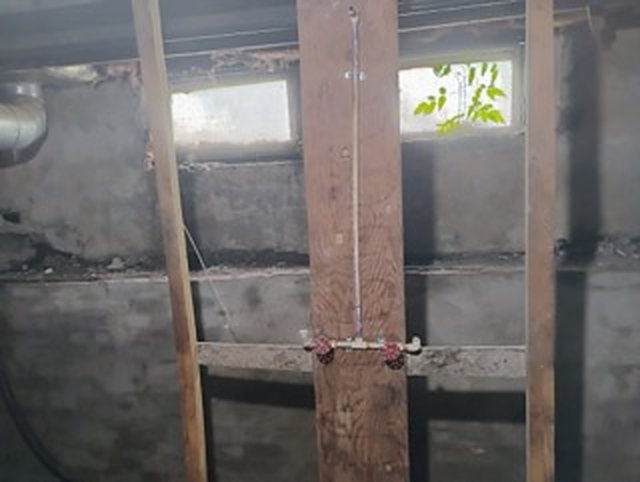
Even if you never saw water come in, a basement that took some will show it later in spring. Look for these.
- A dried water line or stain on the floor along the base of a wall
- White powder or crust on the wall, which is salt left by water drying
- Darker damp patches on the wall that come and go with the weather
- A musty smell that was not there in January
- Rust on the feet of shelving, the furnace or the water heater
- Soft or stained cardboard boxes, and stains on the back of carpet
- Mortar sand on the floor at the base of an old stone or brick wall
Frost, clay and the walls themselves
The freezing does its own damage before the thaw ever starts. Wet clay freezes and heaves, and the ground pushes against the upper part of the basement wall all winter. Water that got into cracks and mortar joints in the fall freezes and opens them a little more each time. By spring, the openings the water needs are already there.
On older Des Moines houses with stone or brick basement walls, that shows up as sandy mortar, loose stones and crumbling joints along the bottom of the wall. On mid century houses with block walls, it can show as cracks along the mortar joints. Newer poured walls usually leak at a crack, at the joint where the wall meets the floor, or around a window well.
Where the house sits matters too. A house on low ground near the rivers, or at the bottom of a slope, takes more water in spring, because water from the higher ground around it ends up there.
When it happens every spring anyway
If the snow is moved, the downspouts are out and the window wells are clear, and the basement still takes water every spring, the water is getting in through the wall itself. That is the point to have someone look.
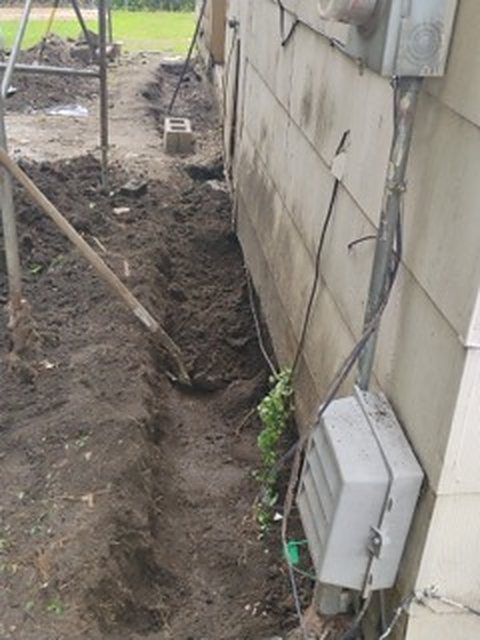
Spring is a good time for it, because the wet spots are easy to find. Joe Gomez runs JC Cement in Des Moines, and water is where he starts. He finds where it is coming in, inside along the walls or outside against the foundation, and fixes it at that spot. Sometimes that means digging along the outside of the foundation to get at the wall. On old stone and brick walls it can mean filling the joints and coating the wall in cement.
Getting Joe to look at it
The basement waterproofing page explains more about how Joe finds and stops water. To start, call or text him at (515) 777-5018. Send the photos you took during the thaw, a wide shot of the wet wall, and what part of Des Moines you are in. If you wrote down dates and weather, send those along too.