One city, both sides of the river
JC Cement is Joe Gomez's business, and it is based in Des Moines. When this site says Des Moines, it means the whole city. That is downtown and the blocks around the Iowa State Capitol on East Grand Avenue, the old neighborhoods to the north and west like Sherman Hill, Drake, Beaverdale and Highland Park, the east side, and the south side from Gray's Lake down toward Easter Lake.
The work is the same in every part of the city. Joe waterproofs basements, repairs old stone and brick basement walls, tuckpoints brick and stone, and puts in egress windows and window wells. What changes from one part of town to the next is the house sitting on top of the basement, how old it is, and how the ground around it drains.
Pages for the parts of town
Des Moines is big enough, and old enough in places, that one page cannot say much that is useful about every basement in it. So the city has its own pages, plus one for the county around it.
- Des Moines, the whole city: where the Raccoon River runs into the Des Moines River, with basements of every age
- The older neighborhoods north and west of downtown: Sherman Hill, Drake, Beaverdale and Highland Park, with rough stone and old brick basement walls
- The south side: Gray's Lake, Easter Lake and Fort Des Moines Park, with hills and low spots, older houses by the rivers and newer ones farther south
- Polk County: the two rivers, Saylorville Lake to the north, and the towns around the city
The towns around Des Moines
Des Moines has suburbs on every side. West Des Moines and Windsor Heights are to the west. Urbandale and Johnston are to the northwest, Ankeny is up I-35 to the north, and Altoona is out east on I-80.
This site only confirms Des Moines. If your house is in one of those towns, call or text Joe at (515) 777-5018 and ask before anything else. Tell him the town and what is going on in the basement. The same goes for anywhere else in Polk County or farther out.
Near the edges of town, a Des Moines mailing address is not always inside the city itself. Give Joe the street and the nearest crossroad when you text.
Basements by the age of the house
Drive from downtown out to the edge of the metro and you pass over just about every kind of basement wall there is.
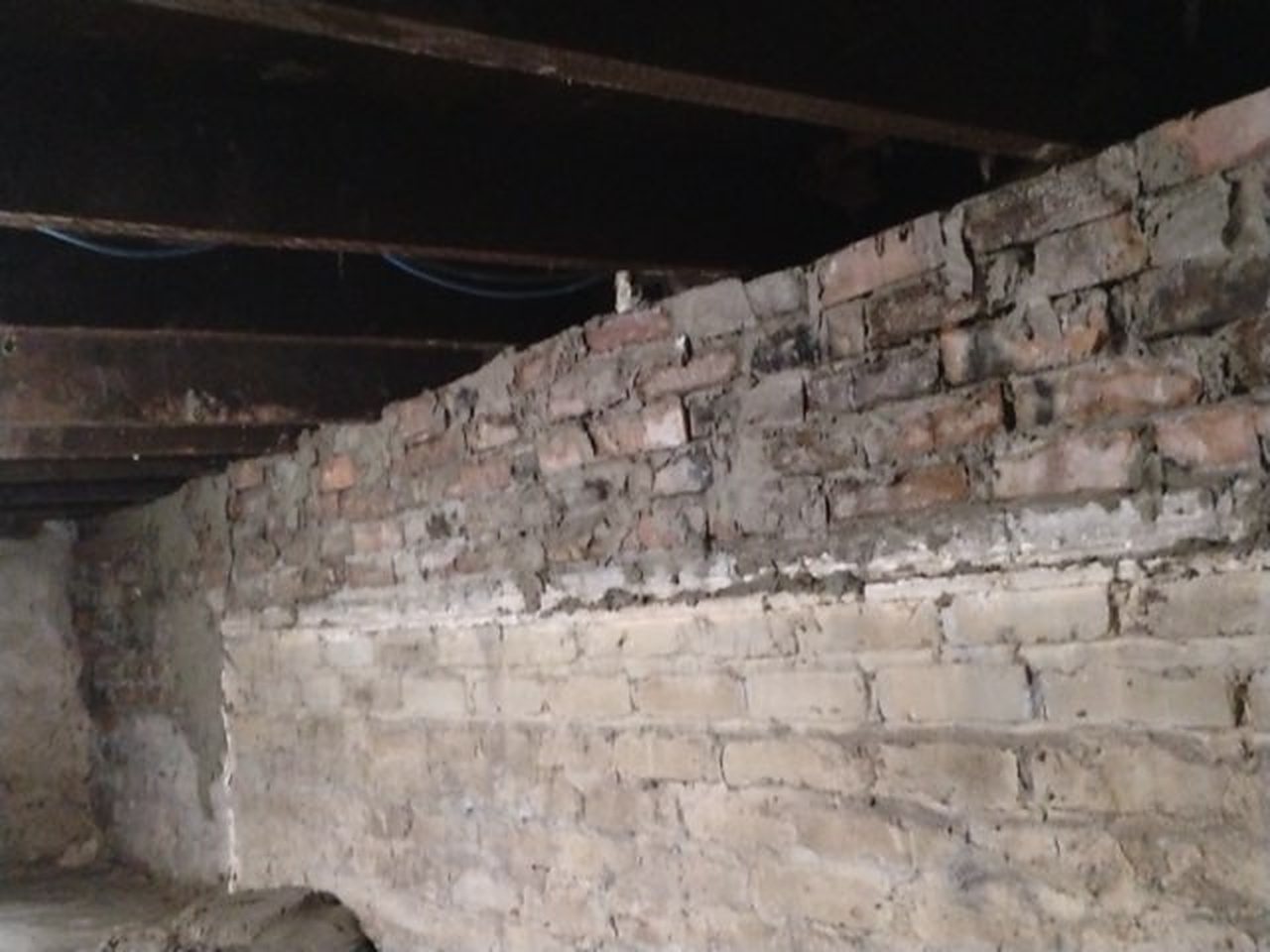
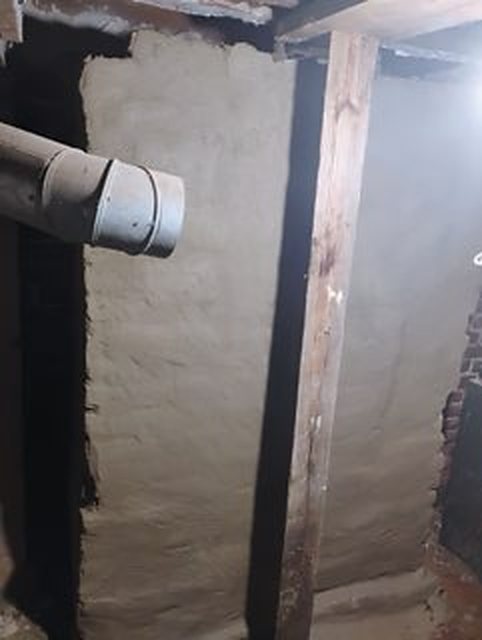
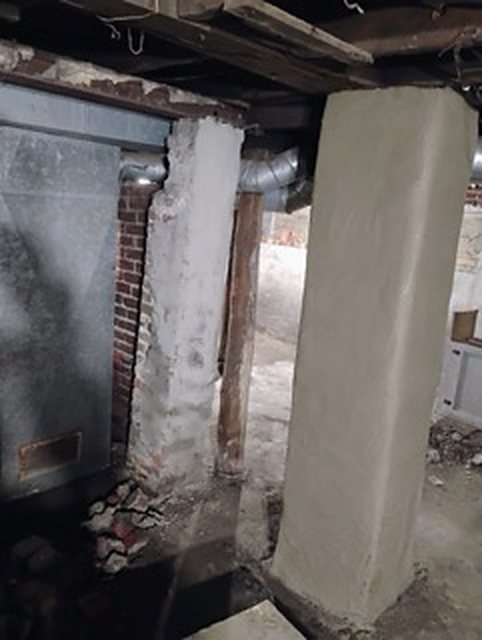
A lot of the oldest houses, from the late 1800s into the 1940s, sit on rough stone or old brick laid in lime mortar. Lime mortar is soft, and over the years water washes it out of the joints until it is sand. Those basements tend to be low and damp, with old brick piers holding up the floor above and small windows at the top of the wall.
Houses from the middle of the century mostly have concrete block basement walls. Block is hollow, and the mortar joints are its weak lines. When wet clay pushes hard against a block wall, it can crack along the joints and start to bow in.
Newer houses, a lot of them out in the suburbs, have poured concrete walls. Those tend to leak in a few known places: a crack, the joint where the wall meets the floor, a pipe coming through, or a window well.
Each kind of wall fails in its own way, so Joe starts by looking at what the wall is made of. A wall that is bowing in, keeps moving, or has a wide crack running sideways is a different matter. Some walls need a structural engineer to look first.
Clay, frost and spring melt
Most of the metro sits on heavy clay the glaciers left behind. A wet spell turns it into a sponge that holds water right up against the basement wall. A dry summer shrinks it and opens gaps along the foundation. Then winter frost heaves it.
The winters are long. Water that soaks into mortar freezes, thaws and freezes again, over and over, and each time it pries the joint open a little more. Snow piled against the house melts in spring while the ground below is still frozen, and that water ends up along the foundation. Wet springs and summer thunderstorms bring a lot of water fast. And low ground near the rivers takes water first.
How a look gets set up
It starts the same way anywhere. Text Joe a wide photo of the wall or the wet spot, a close one of the worst part, and where the house is. In Des Moines, the neighborhood or the nearest big street is enough. Outside the city, say the town.
Joe looks at what the wall is made of and where the water is getting in, then tells you what he would do. You know the plan before anything gets dug or cut.