
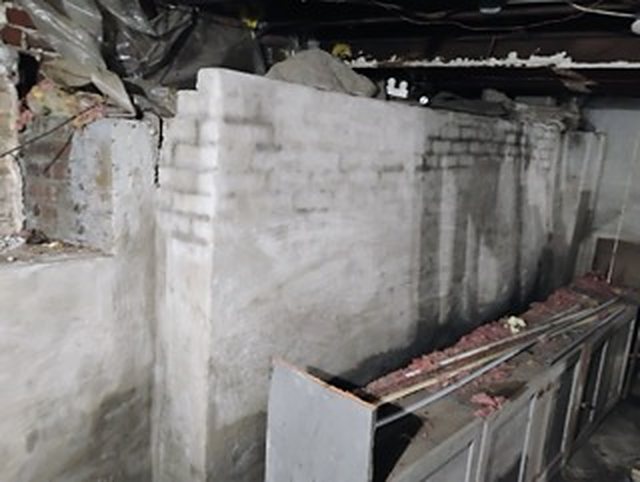
Every basement starts from a different place
Two basements on the same Des Moines street can need very different work. One has a damp corner under a downspout. The other has a stone wall with the mortar gone to sand all the way around. A price list would be wrong for both of them.
So this page lays out what moves the price instead, and you can see where your basement falls. There are no dollar figures here. These are the things that change the job, and so the price.
Size of the job and the kind of wall
The first thing is size. One corner is a smaller job than one wall, and one wall is smaller than the whole basement. With tuckpointing, what drives it is how much joint needs cutting out and packing, so a few bad patches are a different job from a whole side of the house.
Then the material. A poured concrete wall in a newer house is a different job from a block wall in a mid century one, and both are different from the rough stone and old brick under many older Des Moines houses. Stone walls take more hand work. The old mortar is soft and uneven, the stones come in every shape, and filling and coating them goes slower than working on a flat wall.
Sandy joints, loose stones, or a wall that has moved
A wall with sandy joints that is still solid needs filling and coating. A wall with loose stones, bricks falling out and piles of sand on the floor needs more done before it can be coated. And where the bottom of an old wall has crumbled, a new concrete ledge poured along the base means building forms, setting rebar and pouring concrete.
A wall that has moved, bowed or bulged is a different matter. Some walls need a structural engineer to look first, and the engineer's report decides what the fix is. Until then nobody can honestly price it.
Working from inside or digging outside
Some water problems get fixed from inside, along the walls. Others mean digging along the outside of the foundation to get at the wall where the water is coming in. Digging outside is more work. The dirt has to come out, sit somewhere, and go back in, and the yard has to be put right after.
Which one your house needs depends on where the water is coming from. That is the first thing Joe looks at, and it is one of the biggest forks in the price.
Getting to the wall
A lot of basement work is digging, and digging is where access matters most. These are the things that change it.
- How deep and how far along the wall the digging goes
- Whether a machine can reach the spot or it is all shovel work
- Decks, steps, patios, stoops and driveways built right up against the wall
- The air conditioner, the gas meter and buried lines near the work
- Bushes, flower beds, trees and fences along the foundation
- Inside, finished walls, paneling, shelves, or a furnace or water heater against the wall
- Where the dirt goes, and whether it has to be hauled away
- Digging inside a basement, where the dirt has to come up the stairs
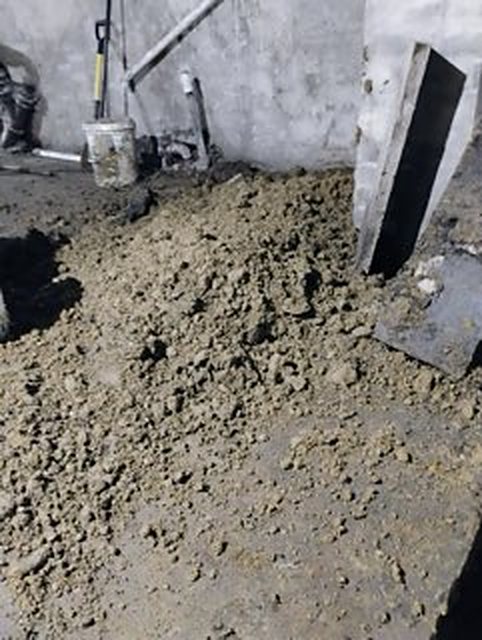
Egress windows have their own costs
An egress window is priced differently from wall work. The bigger opening has to be cut in the foundation wall, which goes differently in poured concrete, block or stone. There is a hole to dig outside for the well, the window itself, the well, and the dirt to deal with. Some openings need support across the top. And the City of Des Moines sets the rules and permits, which can shape the size of the job.
Where the window goes matters too. A spot in open lawn is simpler than one under a deck or beside a driveway.
Fixing the cause along with the wall
Fixing a wall without fixing what soaks it leaves the same water pushing on the new work. If a downspout dumps at the foundation or the ground slopes toward the house, that needs fixing too, and some of it you can do yourself with a downspout extension and a few bags of dirt.
When Joe looks at a wall, he looks at where the water is coming in too, then tells you what he would do.
When you have more than one number
If you get more than one price, make sure they are for the same job. Ask each person where they think the water is coming in, if they plan to work inside or dig outside, what happens to the dirt, and what the price leaves out, like permits, hauling or putting the yard back.
Photos that help Joe size it up
A real price starts with photos. Text these to Joe Gomez at (515) 777-5018.
- A wide photo of the whole wall or the wet area
- A close photo of the worst spot, like the crumbling joint, the crack or the wet corner
- A photo of the outside of the house on that side, so Joe can see what is near the wall
- What part of Des Moines you are in
- How long it has been going on, and if it gets worse after rain or snowmelt
- For an egress window, where you want it and what the room will be used for
After the photos
Photos give Joe a good idea of the size of the job and what kind of wall it is. Then he looks at it in person to see what the wall is made of, where the water is getting in, and what it needs. You know the plan before anything gets dug or cut.
The contact page has the rest of what you need to reach him. Call or text JC Cement at (515) 777-5018 to get started.