
A river town sitting on clay
Downtown Des Moines is where the Raccoon River runs into the Des Moines River. The Principal Riverwalk follows the river through downtown, and the Iowa State Capitol is on East Grand Avenue, east of the river. Saylorville Lake is to the north, and Gray's Lake and Easter Lake are on the south side.
Under all of it is heavy clay soil the glaciers left. Clay is slow to drain. After a rain it stays wet and keeps that water pressed up against basement walls. It swells when it is wet, shrinks in dry spells and heaves with the frost, so the ground around a Des Moines foundation is always moving a little.
Low ground near the rivers takes water first. But you do not have to live by the river to have a wet basement here. A house up on a hill with its downspouts dumping at the wall can leak just as bad.
Winter, spring melt and summer storms
Winter is long, and it goes back and forth. A warm afternoon melts the snow, the water soaks into the mortar, and that night it freezes hard and pushes the joint apart. That happens over and over until spring. Snow gets shoveled and piled up against the house. Then it melts in spring while the ground below is still frozen, and the water heads for the soil along the foundation.
Spring rain comes on top of that, and summer thunderstorms dump a lot of water fast, more than the gutters and the clay can take. A wet basement here usually shows up at one of those times. When it shows up, and where it shows first, is a good clue to how the water is getting in.
Every age of house in one city
Des Moines has houses from the late 1800s right up to now, sometimes a few blocks apart. Closer to downtown, in neighborhoods like Sherman Hill, Drake, Beaverdale and Highland Park and on parts of the south side, plenty of houses stand on rough stone or old brick laid in soft lime mortar. Houses from the middle of the century mostly went up on concrete block. The newest ones are on poured concrete.
On stone and brick, the trouble is mortar gone to sand and damp coming through. On block it is the joints, and wet clay leaning on the wall. On poured concrete it is cracks, the joint at the floor and the window wells. A wall that is bowing in, or has a wide crack running sideways, needs a structural engineer to look first.
What JC Cement does in Des Moines
Joe starts with the water. He finds where it is coming in, inside along the walls or outside against the foundation, and fixes it at that spot. Then he looks at what the wall is made of and what shape it is in.
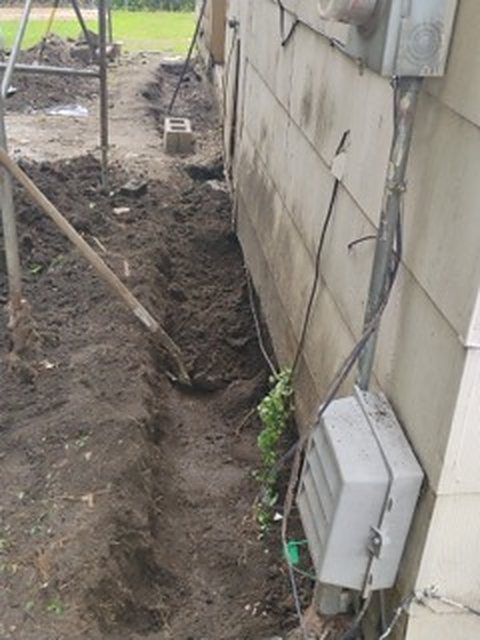
- Basement waterproofing, including digging out along the outside of the foundation
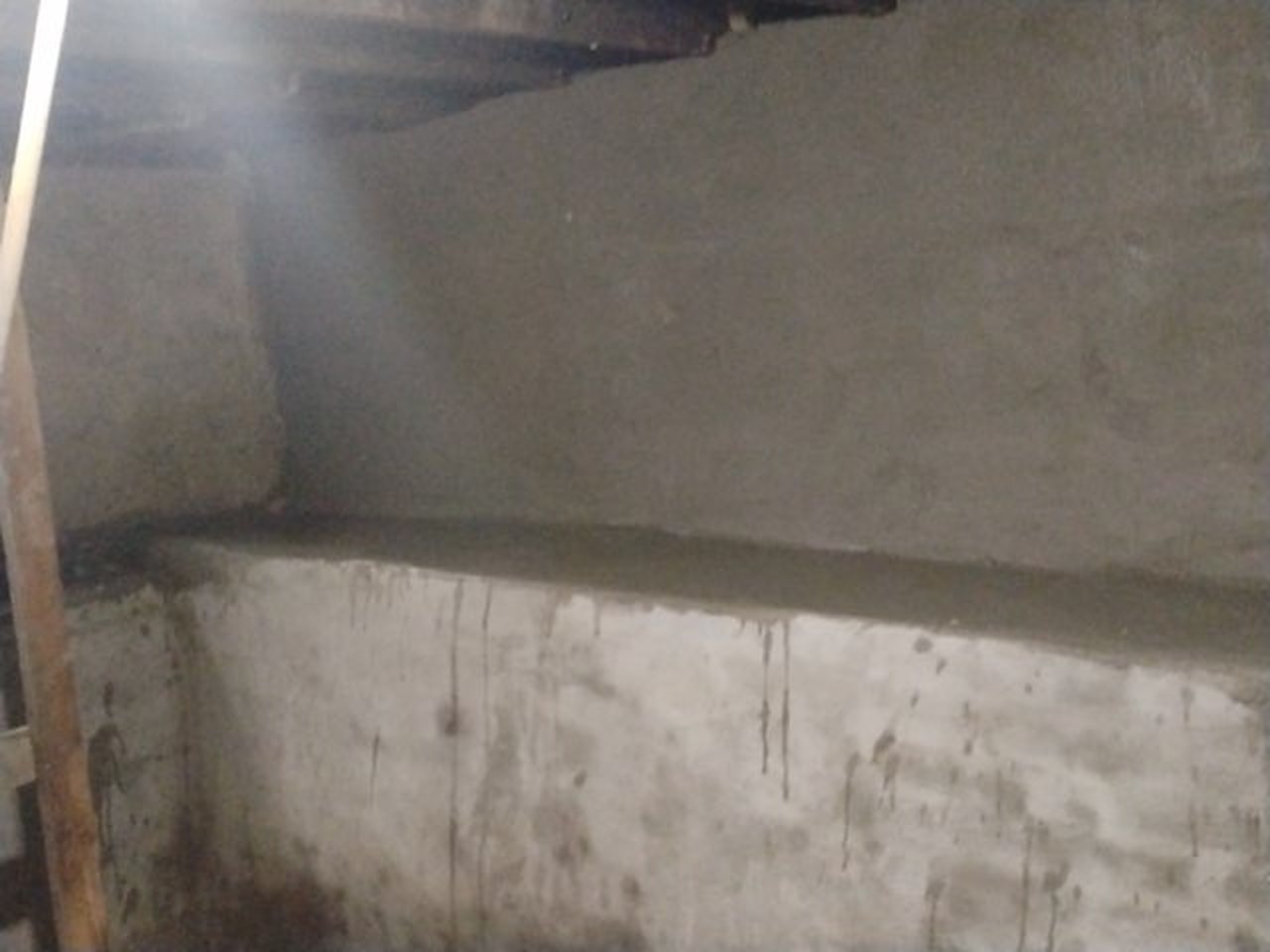
- Basement wall repair: old stone and brick walls filled and coated in cement, a new concrete ledge poured along the bottom where a wall needs one, and old brick piers wrapped in cement
- Tuckpointing on brick and stone, outside on the house and down in the basement
- Egress windows for basement bedrooms, from the bigger opening in the wall to the well outside
- Window wells put in new, or replaced when they rust through, get crushed or fill with water
Permits, radon and things to ask about
For an egress window, the City of Des Moines sets the size, sill height and well rules. Ask the city about permits before the wall gets cut.
Drain tile, sump pumps and swapping an old basement window for a new one in the same opening are things to ask Joe about directly. And Iowa is known for radon. Testing for it is its own job, separate from wall and water work.