
What the word means
Parging is an old trade word for a coat of cement mix troweled over masonry. Masons parge the outside of block foundations where they show above the ground, and they parge the inside of old stone and brick basement walls. In older Des Moines houses it goes on basement walls where the mortar has worn out and the face of the wall is crumbling.
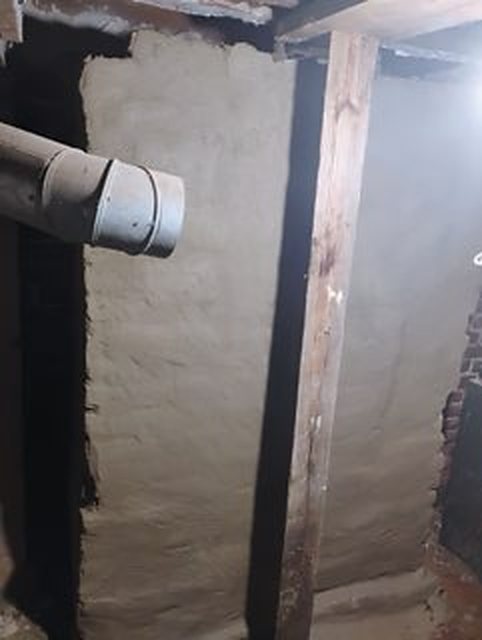
The finish can be rough or smooth. A rough coat, like the gray walls in the photo at the top of this page, is common on old basement walls. The idea is the same either way. A layer of cement holds the face of the wall together and covers what is underneath.
What a coat of cement is good for
On the right wall, a coat of cement does real work. Here is what it can do.
- It holds a crumbling stone or brick surface together so it stops shedding sand onto the floor
- It covers the holes and gaps where mortar has fallen out, once they are filled
- It slows the damp that wicks through an old wall
- It leaves a flat wall you can sweep, wipe down and look over for new cracks
- On the outside, above the ground, it covers worn block or stone and sheds rain
What it will not do
A coat of cement is not a dam. When the clay outside is soaked in a wet spring, water gets pushed against the wall with real force. That water goes through mortar, stone and a thin coat of cement alike. It shows up as damp patches, white crust coming through the coat, or the coat letting go in blisters and flakes.
It will not fix a wall that is moving either. A wall that bows in, leans or keeps cracking has a structural problem, and a fresh coat only hides the cracks for a while. Some walls need a structural engineer to look first.
And it does not take the place of the outside work. Gutters, downspouts and ground that slopes away from the house decide how much water reaches the wall in the first place. If a lot of water still reaches the wall, the waterproofing work comes before the coat.
The prep is most of the job
Cement only sticks to a wall that is sound and clean. A lot of coats that fail were put on over something that was already coming loose. On an old wall, good prep goes about like this.
- Knock off anything loose: crumbling mortar, flaking stone or brick faces, and old patches that sound hollow when you tap them
- Strip old paint and coatings, because cement will not bond to paint
- Brush off the dust and the white salt crust
- Rake out and fill the worn joints and holes first, so the coat goes over a solid wall and not over gaps
- Dampen the wall before the coat goes on, so dry stone and brick do not pull the water out of the new mix too fast
Putting it on and letting it cure
On a rough old wall the cement often goes on in more than one coat. The first one is scratched up while it is soft so the next one has something to grab. Each coat is pressed into the wall with a trowel so it grips the stone and brick behind it.
Then it has to cure. Cement gets its strength slowly, and it needs water to do it. If it dries out too fast, on a hot day or with a furnace blowing on it, it cracks and dusts. If it freezes before it sets, it can be ruined. So a new coat is kept damp for a while and kept from freezing.
The mix has to suit the wall too. On an old soft wall the goal is a coat that holds the face together without being so hard and tight that it traps the damp behind it. Joe looks at what the wall is made of before he decides what goes on it.
Why some parging cracks and falls off
When you see a coated wall with big pieces of it lying on the floor, it usually comes back to one of these.
- It went on over paint, dust or loose mortar
- The wall behind it was still taking water from outside
- It went on too thick in one coat
- It dried out too fast or froze before it set
- The wall behind it moved
A coat with a new ledge at the base
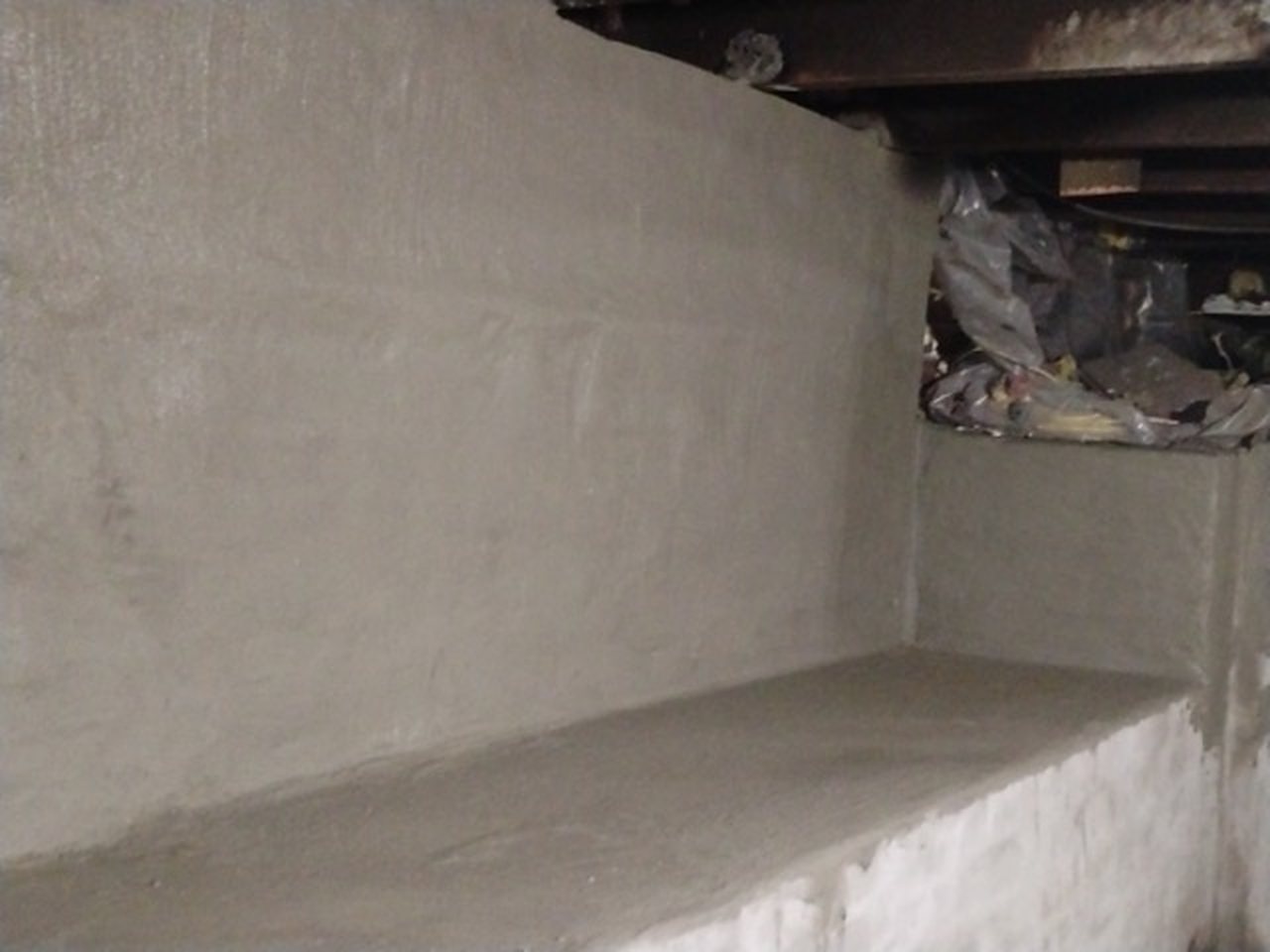
On some old walls the bottom is in much worse shape than the rest. Water sits there longest and the mortar goes first. Where that is the case, Joe can set forms and rebar along the base and pour a new concrete ledge, then coat the wall above it. The photo here shows a wall coated in fresh cement with a new ledge poured along the bottom.
The ledge covers the worst of the wall in new concrete, and the coat above it holds the face of the old wall together. What is left is a basement wall that is easy to sweep and easy to look over.
Doing a small patch yourself
A small spot where a bit of old coat has let go can be a homeowner job. Knock off everything loose, brush it clean, dampen it, and trowel in a patching mix made for masonry. Keep it damp while it cures, and keep it from freezing.
A whole wall is a different matter. The prep takes longer than the coat, the joints usually need work first, and from the floor it is hard to tell how deep the damage goes until the loose material is off. That is the point to have Joe look at it.
Have Joe look at your walls
JC Cement is Joe Gomez's business in Des Moines. Joe fills and coats old stone and brick basement walls in cement, and pours a new concrete ledge along the bottom where a wall needs one. He looks at what the wall is made of and where the water is coming from before he tells you what he would do. The basement wall repair page has more on that work.
Call or text Joe at (515) 777-5018 and send a photo of the whole wall and one up close of the worst spot. Say what part of town you are in.