
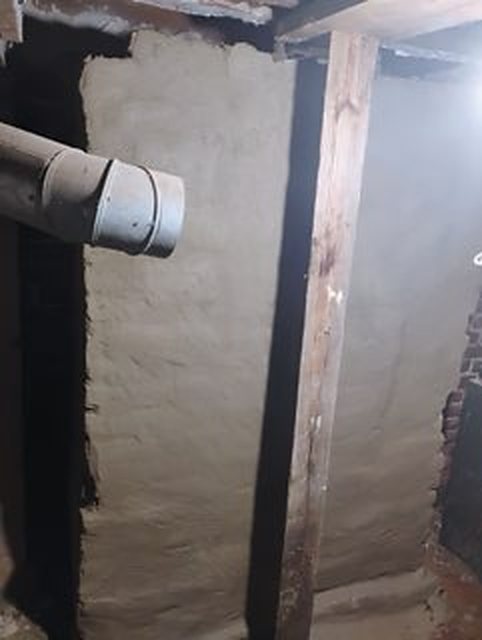
Almost every basement wall cracks somewhere
Concrete shrinks a little as it dries after it is poured, and a basement wall is a long run of concrete with no neat place for that shrinking to happen. So it cracks. On a lot of poured basement walls in Des Moines you can find a thin crack running up and down, often near a window or partway along a long wall. Many of those showed up while the concrete was still drying and have barely moved since.
Block walls and old stone and brick walls crack differently, because they are built from pieces held together with mortar. Their cracks follow the mortar. And the ground around them matters more than the wall itself. Des Moines sits on heavy clay the glaciers left behind. It soaks up water and swells, shrinks and pulls away in a dry spell, and heaves when it freezes. That clay is pushing and settling against basement walls all year.
What matters is what kind of crack it is, whether it lets water in, and whether it is still moving.
Reading a crack by which way it runs
Direction tells you more than anything else about a crack. This is how the common ones usually read on Des Moines basements.
Horizontal cracks are the ones that point to soil pushing on the wall. They show up most in block walls, but a horizontal crack in a poured wall means the same thing.
- Thin vertical cracks in a poured wall: usually shrinkage. They can leak, but they rarely mean the wall is failing.
- Diagonal cracks running off the corner of a window or near the end of a wall: often settling, where one part of the house sank a little more than the rest.
- Stair step cracks along the mortar joints of a block wall: settling or pressure from the soil. A thin one that stays put is one thing. A wide one that keeps opening is another.
- Horizontal cracks in a block wall, often partway up near where the ground sits outside: wet clay and frost pushing the wall in. This is the one to have looked at.
- Crumbling joints and loose stones in an old stone or brick wall: mortar giving out more than a clean break.
Width, and whether both sides still line up
A hairline crack is about as thin as a pencil line. You can see it, but you cannot get a fingernail into it. Plenty of those sit in walls for as long as the house stands.
Once you can slide the edge of a coin into a crack, it is wider than most shrinkage cracks get. That does not mean the wall is failing, but it is worth marking and watching. And if one side of the crack sticks out farther into the basement than the other, the wall has shifted as well as cracked.
Bowing is the other thing to check. Hold a long level against the wall, or pull a string tight from one end to the other. A block wall that bellies in toward the room in the middle, usually along a horizontal crack, is being pushed by the soil outside.
Marking a crack so you can tell if it grows
You do not need special tools. The point is a record, so that next spring you are comparing against something written down instead of trying to remember.
Clay ground moves with the seasons, so a crack can open a little in a dry late summer and close up some after a wet spring. A crack that opens and closes in the same spot is a different thing from one that keeps running past your marks year after year.
- Draw a pencil line across each end of the crack and write the date next to it.
- Take a photo with a coin held flat against the wall beside the widest spot, so you have something to compare size against later.
- Take a second photo from farther back that shows where the crack sits on the wall.
- Check it after the spring thaw, after a dry stretch in late summer, and after the first hard freeze.
- Write down if it got longer past your marks, got wider, or if one side moved out of line.
- Note anything new upstairs too, like a door that started sticking or a fresh crack in the drywall over a doorway.
Which cracks let water in
Any crack that goes all the way through a wall can leak when the ground outside is soaked. In Des Moines that is spring, when snowmelt and rain land on ground that is still partly frozen, and after summer thunderstorms that drop a lot of rain fast. A crack that stays dry in January can run water in April.
The low part of a wall leaks first, because that is where water collects against it. A crack that runs down to the floor will often wet the floor at its bottom end before anything shows higher up. A crack under a window often traces back to a window well that fills with water.
The signs are easy to spot once you know them. Look for darker damp edges along the crack after rain, a white powdery crust along it, brown or rusty streaks running down from it, or a dried water line on the floor below. Then go outside and look at the same spot. A downspout that empties against the wall there, or ground that slopes toward the house, is a common partner to a leaking crack.
Signs a wall has moved
Some walls need a structural engineer to look first, before anyone talks about patching, coating or waterproofing them. These are the signs that point that way. If you see one, hold off on covering or finishing that wall until it has been looked at.
- A horizontal crack in a block or poured wall
- A wall that bows or leans into the basement
- A crack where one side sits out farther than the other
- A stair step crack that is wide or keeps getting wider
- A crack that keeps growing past your marks from one season to the next
- In an old stone wall, a bulge or stones pushing out of the face
What an engineer's report gets you
A structural engineer looks at the wall, says whether it is still moving and what it needs, and puts that in writing. With a report in hand, everyone you call to price the work is pricing the same fix.
There are repairs for walls that have moved, like bracing a wall from the inside or rebuilding part of it. Those are a different kind of job from coating or waterproofing a wall, and not something to guess at. Ask Joe which parts of that kind of job he takes on.
Old stone and brick walls crack their own way
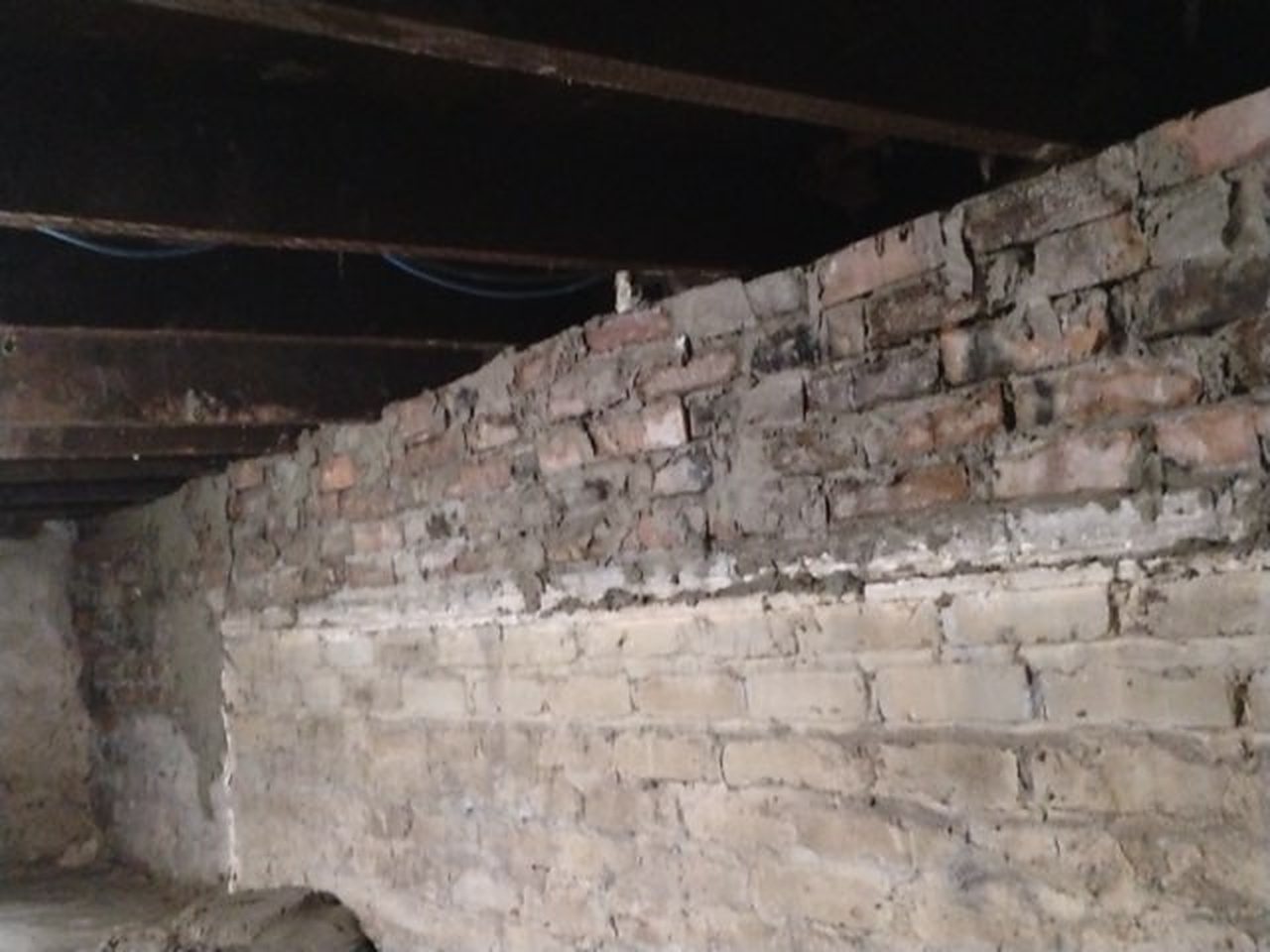
In the older parts of Des Moines, like Sherman Hill, Drake, Beaverdale and Highland Park, and on parts of the south side, plenty of houses sit on basement walls of rough stone or old brick laid in soft lime mortar. These walls rarely show one clean crack. The mortar turns to sand, joints open up, a stone works loose, and the face of the wall starts crumbling onto the floor.
Joe's own job photos are of walls like these. On them he fills and tuckpoints the open joints, coats the wall in cement, and pours a new concrete ledge along the base where a wall needs one. But a stone wall with a real bulge in it is the same story as a bowing block wall. It needs an engineer's eye before anyone covers it up.
What makes a crack worse, and what hides it
Most crack trouble starts outside. A downspout that empties at the foundation, a gutter that overflows in the same spot every storm, or a yard that slopes toward the house keeps the clay along that wall soaked. Wet clay is heavy, it swells, and in winter it freezes against the wall. Carrying that water out into the yard is a small job that takes a lot of load off a cracked wall.
Inside, the common mistake is covering a crack before you know what it is doing. Smearing caulk over it and framing a wall in front of it hides the one thing you need to watch. If you are finishing the basement, mark and photograph every crack first, and deal with the leaking ones before the drywall goes up.
One more thing. Iowa is known for radon, a gas that comes up out of the ground, and cracks are one of the ways it gets into a basement. Testing for it is a separate job from crack and water work.
Where to go from here
If a crack is letting water in, the basement waterproofing page explains how Joe Gomez of JC Cement finds where water is getting in, inside along the walls or outside against the foundation, and fixes it at that spot. If the crack is in an old stone or brick wall that is crumbling, the basement wall repair page goes through filling, coating and the new concrete ledge along the base.
Either way it starts the same. Call or text Joe at (515) 777-5018 with a wide photo of the wall, a close photo of the crack with a coin beside it, and what part of Des Moines you are in. If you have been marking the crack, send the dates too.